Annual Conference - 2026
Abstracts
An Analytical Study of the Rāgamūrti Tradition of Odissi Music
Jyoti Singh
Mahāgāmi Gurukul Center for Performing Arts, MGM University
Odissi music has a distinctive tradition, evident not only in texts written in Odisha between the sixteenth and eighteenth centuries, but also in some of the compositions and rāgas used in contemporary Odissi music. A clear reflection on the melodic nature of medieval rāgas, known as Rāgamūrti is evident in musicological treatises of Odissi (lakṣaṇa texts). The present paper will analyze the concept of Rāgamūrti in the context of these texts, including the origin of rāgas, their tonal structure (svara–saṅgati), and the figurative imagery (rāga–mūrti– kalpanā) of rāgas. Through a comparative study of the principles of Rāga formation (Rāga–nirmāṇa–siddhānta), Rāga metaphors (Rāga–rūpaka), and descriptions of rāga deities (Rāga–devatā) described in Saṅgīta–Nārāyaṇa (1750 CE) and Gītaprakāśa (1565 CE), this research will attempt to uncover the historical, cultural, and philosophical dimensions of the rāga tradition of Odissi music. This study not only helps rediscover the ancient textual tradition of Odissi music but also underlines the relevance of the concept of Rāgamūrti in contemporary Odissi musicology.
संगीत की रागमूर्ति परंपरा का विश्लेषणात्मक अध्ययन
डा. ज्योति सिंह
महागामी गुरुकुल सेण्टर फॉर परफार्मिंग आर्ट्स , एम जी एम विश्वविद्यालय
ओड़िशी संगीत की विशिष्ट परम्परा रही है जो सोलहवीं शताब्दी से लेकर अठारहवीं शताब्दी के मध्य ओडिशा में लिखित ग्रंथों के आधार पर तो प्राप्त होती है साथ ही वर्तमान ओड़िशी संगीत के प्रयोग की कतिपय रचनाओं और रागों में भी दृष्टिगोचर है। ओडिशी संगीत के रागों में एक विशिष्ट परंपरा दिखाई देती है जिसमें कतिपय रागों की संरचना प्राचीन जाति गायन परम्परा से मिलती जुलती है, किन्तु मध्यकालीन रागों के नादमय स्वरुप का भी चिन्तन स्पष्ट होता है, जिसे ओड़िशी लक्षण ग्रंथों में रागमूर्ति की संज्ञा प्राप्त है। ओडिशी संगीत की रागमूर्ति परंपरा भारतीय संगीत चिन्तन की एक विशिष्ट धारा है, जिसमें रागों का स्वरूप, स्वभाव, तथा उनके दैवी‐काव्यात्मक आयामों को मूर्त रूप में व्याख्यायित किया जाता है। संगीतनारायण (1750 ईस्वी) और गीतप्रकाश (1565 ईस्वी) में उल्लिखित राग-निर्माण के सिद्धांतों, राग-रूपकों, तथा राग-देवताओं के वर्णनों के तुलनात्मक अध्ययन के माध्यम से यह शोध ओडिशी संगीत की राग परंपरा के ऐतिहासिक, सांस्कृतिक और दार्शनिक आयामों को उजागर करने का प्रयास करेगा । यह अध्ययन न केवल ओडिशी संगीत के प्राचीन ग्रंथ-परंपरा की पुनर्पहचान करने में सहायक है, बल्कि समकालीन ओडिशी संगीतशास्त्र में रागमूर्ति अवधारणा की प्रासंगिकता को भी रेखांकित करता है।

A Contrastive Analysis of the padam-s Ōsōsi and Payyada in Karnāṭaka Music and Bharatanāṭyam Dance Recitals
Priyashri V Rao
JAIN (Deemed-to-be University), Bengaluru
The Padam is a genre common to the repertories of Karnāṭaka music and Bharatanāṭyam dance. Performing a padam is considered a mark of a virtuoso and requires specialized training. The genre is musically sophisticated as well as rich with possibilities for depiction in histrionic expression (abhinaya). The primary focus in this paper is to analyze whether there are differences when the same genre is performed for a musical and a dance recital. Two padam-s are chosen for the analysis, namely, Ōsōsi nā madi (rāga Mukhāri) and Payyada paimīda (rāga Nādanāmakriyā) from of the Vīṇā Dhanammāl bāṇi. This school is special as it boasts of both music and dance versions. For instance, the Karnāṭaka music rendition by T Brinda and T Mukta, and a rendition of Jayamma for the dance performance of Balasarasvati. A few other renditions, such as those of R. Vedavalli and M.S. Subbulakshmi, and the choreography of the well-known Bharatanāṭyam exponent Kalanidhi Narayanan will also be taken for analysis. The analysis will look at what governs the choice of the rāga phrase(s) in the different renditions: the abhinaya interpretation or the organic progression of the rāga?
An Analysis of Tānam (Ghanam) in Subbarāma Dīkṣita’s Prathamābhyāsa Pustakamu
Rajshri Ramakrishna
University of Madras
This paper examines the method of playing tānam, also traditionally known as ghanam on the vīṇā as described by Subbarāma Dīkṣita in his Prathamābhyāsa Pustakamu (PAP, 1905).The paper presents and analyses all available tānam (ghanam) notations in PAP. These include extensive passages in the rāgas Nāṭa, Gauḷa, Śrī, Ārabhi, Rītigauḷa, and Nārāyaṇagauḷa, all of which belong to the traditional ghana-rāga group known for their suitability for tānam singing and playing. Subbarāma Dīkṣita’s notations are remarkable for their technical specificity: they include detailed string-position instructions, mīṭṭu (plucking) instructions, explicit octave (sthāyi) transitions, and an elaborate gamaka vocabulary. A key contribution of this paper is the establishment of a clear distinction between the ghana-rāga tānam described and illustrated in the PAP and the tāna passages presented in the Saṅgīta Sampradāya Pradarśini (SSP, 1904). Although SSP provides tānam notations for 42 rāgāṅga rāga-s, these passages function primarily as model patterns illustrating rāga structure rather than as expositions of ghanam-style tānam playing. The paper further examines the purpose of the tānam passages in the SSP vis-à-vis the ghanam-oriented tānam-s presented in the PAP, thereby understanding the distinct aims of the two sources.
The Theory of Warm and Cold Rāga-s in the Music of the Puṣṭimārga
Goswami Ranchodlalaji (Abharan)
Goswami Haveli, Ahmedabad
Vallabhācārya (1478-1530) the founder of the Śuddhādvaita Vedānta philosophy and the path of devotional love (Puṣṭimārg), established a liturgy of serving Lord Krishna-Shrinathji through rāga music, and songs (kirtan) in particular. In the Puṣṭimārg tradition, Lord Krishna is considered the sole recipient of all offerings, including music known as Haveli Sangeet. In this system, special attention is paid to the tangible nature of the ragas, based on the principle of "as in the body, so in the deity." (yathā dehe tathā deve). Here, the repertoires of rāga-s and rāgiṇī-s are arrayed based on the 'hot' and 'cold' nature of the ragas, which is linked to the cycle of seasons. In this context, the musical elements of these rāgas such as dominant notes (aṁśa), and resting notes (nyāsa) are analysed in an attempt to understand the hot and cold nature of the rāga-s used in kīrtan music, and to determine whether this classification is imaginative-emotional or if it has a musical basis.
पुष्टिमार्गीय कीर्तन संगीत में रागों द्वारा शीत-उष्णादि उपचार
गोस्वामी रणछोडलालजी (आभरण)
गोस्वामी हवेली, अहमदाबाद
वल्लभाचार्य (सन् १४७८-१५३० ) शुद्धाद्वैत वेदांत दर्शन तथा प्रेमक्षणात्मक निर्गुण भक्ति- पुष्टिमार्ग के प्रवर्तक हुए हैं, जिन्होंने कृष्ण - श्रीनाथजी की सेवा में कीर्तन का पर्याप्त महत्व बतलाकर राग सेवा की प्रणालिका दृढता से स्थापित की। पुष्टिमार्ग में प्रभु श्रीकृष्ण को सर्व उपचारों का भोक्ता मना गया है। श्रीकृष्ण की सेवा में राग भोग और श्रृंगार प्रणालियों का विनियोग किया जाता है। पुष्टिमार्गीय कीर्तन के रूप में राग सेवा की बृहद् प्रणाली है जिसे हवेली संगीत नाम भी दिया गया है । राग सेवा परंपरा में रागों की “यथा देहे तथा देवे" के सिद्धान्त से मानव ग्राह्य प्रकृति पर विशेष ध्यान दिया गया है । यहाँ राग-रागिनियों में ऋतु चक्र आधारित रागों की उष्ण-शीत प्रकृति के आधार पर प्रणालियों का विस्तार होता है। कई रागों को शीतल और कइयों को उष्ण तासीर का माना गया है - इस विषय में इन रागों के बहुधा सांगीतिक तत्व जैसे कि स्वर, अंश, न्यास आदि की भी महत्ता उजागर होती हैं । इन सभी प्रायोगिक हेतुओं के आधार पर रागों की समालोचना खूब महत्वपूर्ण लगती है । इस अनुसंधेय शोध प्रपत्र में कीर्तन संगीत में विनियुक्त रागों की शीतोष्णप्रकृत्यात्मक पहलुओं की समीक्षात्मक रूप से विवेचना के द्वारा यह जानने का प्रयास किया जायेगा कि इस वर्गीकरण का आधार केवल भावात्मक है वा इसका कोई सांगीतिक आधार भी है।
Between Rhyme, Metre and Syntax: Svāti Tirunāḷ's Science of the Song
Naresh Keerthi
Ashoka University
Head-rhyme (etukai, prāsa) and caesural assonance (mōṉai, yati) are obligatory features of many poetic and lyric genres in the Dravidian languages. The sung genres of Early Modern South India--padam and kr̥ti-- adopt these same elements as markers of 'vertical' and 'horizontal' of structural relations within the song. While composers of Telugu, Tamil and Malayalam songs in the 15-18th centuries seem to know and comply with these rules inductively, it is not clear if they are discussed in treatises of prosody or metrics. The rules for the application of head-rhyme, caesural assonance and enjambment (in Sanskrit songs), are articulated for the first time in Svāti Tirunāḷ's tract Muhanāprāsāntyaprāsavyavasthā ( Syntax of Song) with illustrations from the songs of a certain Śēṣayyaṅgār. This paper will discuss the principles of composition enunciated in this Sanskrit text in light of a little-known Malayalam archetype. Knowledge of these principles can aid in the critical reconstructions of songs. ˀ
Rāga Dohā: A Case Study from Two Texts of the Early Twentieth Century
Keshavchaitanya J. Kunte
Centre for Performing Arts, Savitribai Phule Pune University, Pune
Rāga Lakṣaṇa or the rules of performing raga-s in Hindustani music are sometimes found codified in verse in musicological texts. Such verses called Rāga Dohā-s were preserved in the oral tradition of performers. These Rāga Dohā-s were part of pedagogy in Dhrupad Bāni and Khayāl Gharānā-s till the early decades of the 20th century. The practice of reciting and memorising, reciting and teaching Rāga Dohās faded away by the middle of the 20th century, and now it seems that Rāga Dohās are almost extinct in Hindustani Art music. This paper discusses the nature and importance of Rāga Dohā-s, with a case study of Rāga Dohā-s documented by two Khayal singers from the early 20th century.
Locating a Lost Authority: The Discovery of the Kaḷāṅkura-nibandha
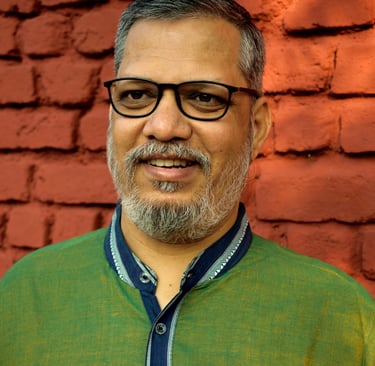
Prateek Pattanaik
Berhampur University
The Kaḷāṅkura-nibandha is a central text in the rāga tradition of Odissi music ascribed to an eponymous sage. Despite its seminal authority, demonstrated by frequent citations in all major subsequent treatises such as the Gītaprakāśa (15th-16th c.) and the Saṅgītanārāyaṇa (17th c.), this foundational treatise on music has long been considered lost. The text's importance is twofold. First, as a technical work on music, it is a primary source for the medieval theoretical framework of Odissi music. Second, it is significant that it is composed in the Odia language, rather than the customary Sanskrit. It is dated to the 15th-century, which makes it a contemporary of the Saraḷā Mahābhārata. This means it is not only among the oldest known technical treatises in Odia, but is one of the earliest samples of Odia literature itself. This paper presents the landmark discovery of two extant manuscripts of this vital text, a preliminary description of the content of the manuscripts, and the first account of the text as an integral entity. This work should fill a major lacuna, offering direct access to a 15th century primary-source of Odissi music theory, especially the Odishan rāga-visualisation (rāga-citra) system and its unique features. Further, the text should also serve as an invaluable new resource for Odia linguistic studies.
Book Introduction: Puṇḍarīkamāla - An Overview of R. Sathyanarayana’s Critical Editions of Paṇḍarī Viṭṭhala’s Musicological Treatises
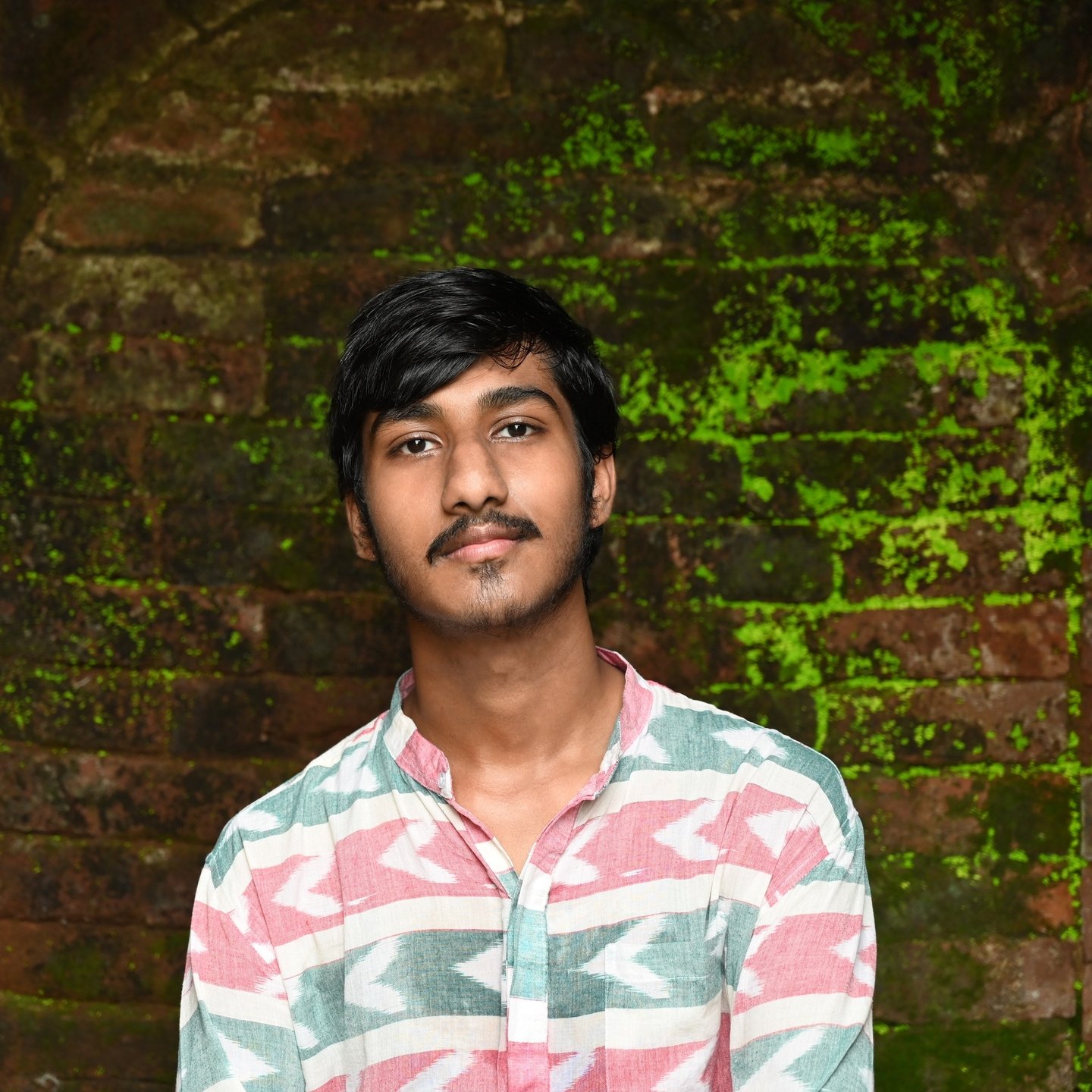
Arati Rao
Jain University, Bengaluru
Paṇḍarī Viṭṭhala (PV) has authored six works: Sadrāgacandrōdaya (SC), Rāgamañjarī (RM), Rāgamālā (RMāla), Nartananirṇaya (NN), Dūtīkarmaprakāśa (DP) and Sīghrabōdhini-nāmamālā (SN). Of these, the four texts SC, RM, RMāla and NN have been critically edited and translated into Kannada by R. Sathyanarayana in his ‘Puṇḍarīkamālā’ (PM). This publication was brought out by Karnataka Sangeetha Nrithya Academy and Directorate of Kannada and Culture in 1986. Of these works, SC describes the rāga-s of South Indian Music, RM and RMāla describe the rāga-s of North Indian Music. RM is not an independent work, but an extract of the first subdivision of the third chapter of NN. The three works SC, RM and RMala also deal with the concept of svara, śruti, grāma, mūrchana, tāna, varṇa, alaṁkāra, ālapti, sthāya, gamaka etc., as well as schemes and criteria of rāga classification. In his introduction to PM, Sathyanarayana gives biographical details about PV and the time-period of his works. He discusses key concepts elucidated in the four texts – svara vikṛti, rāga-s with kākali and antara svara-s, rāga mēla-s and computation of scales, vīṇā mēla, Persian pardah-s etc. He examines the influence of PV in the works of later authors such as Śrīkaṇṭha, Bhāvabhaṭṭa and Tulajēndra. PM has the complete translation of the four texts along with the original Sanskrit verses. The publication has indexes pertaining to musicological texts, authors, technical terms and special names. The book introduction session gives an overview of the PM and attempts to highlight its seminal contribution to Indian Musicology.
The Concept of Music in Bhāratīya Thought
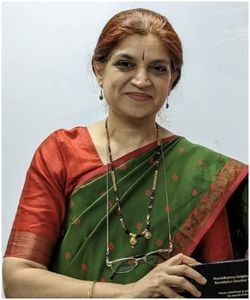
N. Ramanathan
Madras University (Ret.)
The session is planned as a 45-minute question-and-answer discussion with the author. The author will not be presenting the paper during the session. Participants are requested to read his paper in advance and come prepared with questions.
A Notation for the Ancient Indian Harp: The Kuḍumiyāmalai Music Inscription Reconsidered
Richard Widdess
SOAS University of London
The most prestigious and ubiquitous instrument type of ancient Indian music was the arched harp (vīṇā, yāḻ). Yet little is known about the playing technique of the instrument: the evidence of iconography and literary references is diverse and inconclusive.
The 7th-or 8th-century CE music inscription at Kuḍumiyāmalai, in Tamil Nadu, South India, is the oldest surviving example of musical notation from South Asia. This anonymous pedagogical document provides extended melodies, totalling some 2,400 notes, in the seven earliest rāgas, the śuddha grāmarāgas. The notation includes unique vowel-inflections of the sargam syllables that have been interpreted as denoting melodic contour (Widdess 1979).
Digitisation and statistical analysis of the text now provides compelling evidence for this interpretation. But a melodic contour notation is unprecedented and unparalleled in saṅgīta-śāstra, and is redundant in the inscriptional notation because superscript dots distinguish octave registers, which also determines melodic contour. A possible explanation is that the vowel-inflections constitute a fingering notation for a stringed instrument; correlation with melodic contour can then be seen as a by-product of this notation, rather than its direct purpose. An interpretation of the notation as a fingering system for a large arched harp will be presented with reference to statistical evidence, iconography, and a description of harp technique from the Nāṭyaśāstra.
Oral Scholasticism in Hindustani Musical Aesthetics
Dard Neuman
University of California, Santa Cruz
Drawing on audio recordings of spoken and sung discourse alongside musical performance by five musicians—Sadiq Ali Khan, Faiyaz Khan, Abdul Wahid Khan, Vilayat Khan, and Bade Ghulam Ali Khan—this paper rethinks the epistemology of modern Hindustani music through the lens of what I call oral scholasticism: a mode of research and aesthetic reasoning developed through oral–aural media of pedagogy, practice, and performance. Working through archival recordings, the paper traces how musicians engaged both Indic and Islamicate aesthetic vocabularies—śāstra and ʿilm—while articulating a secularity grounded not in scriptural authority, but in sonic discernment, judgment, and practice. Using new technologies of transcription, specifically the Interactive Digital Transcription and Analysis Platform (IDTAP), I align speech, melody, and syllabic articulation on a shared temporal grid, making acts of oral theorizing analytically legible on their own terms.
By treating musicians as theorists of their own art, the paper situates Hindustani music within a broader history of sound-based epistemology and proposes a new methodological vocabulary for studying the knowledge practices of performance.
The Reading Circle in FRIM 2026
What is the Reading Circle?
To do good Historical Musicology, one needs a formidable list of skills: musical, historical and textual. And if one wants to go beyond printed texts, they will require some degree of text-critical and philological expertise. This means learning to use print and manuscript material, to constitute a reliable reading of the text, preparing an edition, and translating the text precisely. It is only with a reliable edition and a rigorous translation that further interpretations can be built.
This can seem like a tall order, regardless of how many years of experience one has. One doesn't have to dive down the deep end of linguistic and philological pool, certainly not by themselves One of the ways to make the experience less stressful, and the end-product better, is to organize a reading circle with the materials one is editing or translating. The Reading circle is simply an exercise where people gather - either in person or online, and take turns reading, translating and annotating a text. The reading circle is meant to be collaborative, not competitive, and participants can choose to be active (or not) in the translation exercise. Participating in the reading circle doesn't mean one is compelled to translate; one can learn a great deal by being an auditor in such sessions.
We hope you find this model interesting, and take it forward, even after the conference.
What Does One Do in the Reading Circle?
The idea behind this session is to 'workshop' the idea of the reading circle for FRIM. We've chosen a selection from the Gītavinōda chapter from Sōmēśvara's Rājamānasōllāsa for this time. Here's a folder with a transcript of the Kannada Edition [thanks to Prof Arati Rao], and a pdf of the Baroda edition of the Rājamānasōllāsa [thanks to Prof N. Ramanathan].
We could aim to read the first 30 verses; the goal is to be thorough, and to take everyone along, rather than to cover ground. This is the format we will follow:
We will read the verses in advance and note textual problems
We will take turns translating one verse each, followed by annotations and comments from the rest of room (and the zoom)
We will finalize the text and translation of the verse based on the collective understanding, and add any annotations
Repeat the cycle for another verse, and another, till we run out of time
Uncovering Musical Histories in South Asian Oral Musics
Eshantha Peiris
University of British Columbia
How can we study the histories of musical styles that have no written documentation? In this talk, I suggest that it is important not only to explore the oral histories of musical sounds, but also to re-examine the stories and motivations behind particular historical narratives that we have received. Observing deep-rooted similarities between musics in Sri Lanka and the Indian subcontinent, and uncovering more recent interventions, I argue that identifying shared characteristics among musical vocabularies can point toward shared cultural histories among communities that are today commonly defined by their differences.
Subbarāma Dīkṣita As a Source: A Study of His Compositions in Two Twentieth Century Musical Publications
Aishwarya Shankar
Queen Mary's College, University of Madras
Eight of his Subbarāma Dīkṣita's compositions are found published in the Oriental Music in English Notation (OMEN, 1893). While it is quite clear that he must have been A.M. Chinnaswamy Mudaliyar's source for these songs, the OMEN versions include certain modifications and additional details, vis-à-vis the subsequent text: Subbarāma Dīkṣita's Saṅgīta Sampradāya Pradarśinī (SSP, 1905). A comparison of the two sets of notations reveals differences in melodic phrasing, sāhitya, and tāla nomenclature. Mudaliyar’s documentation also mirrors several aspects of Subbarāma Dīkṣita’s gamaka indications, while employing Western notation symbols to approximate specific gamaka articulations. Furthermore, the Oriental Music periodicals provide supplementary notes and even the years of composition for some pieces—information that is absent in the SSP. This paper will compare the convergences and the differences between Dīkṣita's compositions in these two publications, and reflect on these changes that appear within a short time, with such a close line of transmission.
Ambiguous Articulations - A re-look at the Gāyakī and Tantrakārī styles in Hindustānī Instrumental Music
Sugnan Dani
Jain University
The Gāyakī (vocal) and Tantrakārī (instrumental) styles are central to the performance of Hindustānī instrumental music. Though these terms are widely invoked in both performance discourse and scholarly writing, their usage remains inconsistent and often imprecise. Does a Hindustānī instrumental rāga performance described as Gāyakī style imply adherence to the vocal idiom of khyāl or dhrupad, or both? Does the term refer to the adherence to lyrics, concert format, stylistic treatment of melodic phrases, or some combination of these elements? Furthermore, can the Gāyakī or Tantrakārī styles be attributed to individuals as part of their performance identities? This study examines such questions by exploring the characteristics and performance methodologies associated with Gāyakī and Tantrakārī styles within the context of Hindustānī instrumental music. Through qualitative interpretation of different segments of select Hindustānī performances of Bānsurī, Harmonium, Jaltaraṅg, Santūr, Sarōd, Sitār, and Violin, the study attempts to revisit these terms, and to unpack the conceptual ambiguities surrounding them.
Where Is Rāga Born? A Musicological Analysis of Kṣemakarṇa’s Rāgotpatti.
Ayesha Sheth
Ahmedabad University
This paper examines the unusual rāgotpatti (origin of rāga) section of Kṣemakarṇa’s Rāgamālā (1570), in which each rāga is said to originate from a specific sound of the animate or inanimate world—from birdsong and animal calls to the noises of daily labour. While art historians have analysed these verses for their influence on the rāgamālā painting tradition, their implications for musicology remain largely unexamined. Such features are often characterised in modern scholarship as “extra-musical,” peripheral to rāga grammar or performance practice. Through a close reading of earlier saṅgītasāstra—especially Śārṅgadeva’s theorisation of sthāya—this paper investigates the musicological function of these sonic analogies. By examining how premodern theorists mobilised so-called “extra-musical” material to conceptualise rāga, the paper argues that these origin sounds were not peripheral but central to how rāga was theorised. The paper concludes by reflecting on a broader shift in rāga theorisation: from scalar organisational systems (grāma, mūrchhanā) to later texts that draw on the wider material and sonic world as constitutive parameters of rāga identity.
Rhythm and Movement in Hindustani Raga Performance
Martin Clayton
Durham University
The Hindustani tradition is well known both for its sophisticated tala system and range of techniques for developing complex rhythmic variations, and for its development of free rhythm alap. In recent years it has become possible to gather data relating to the movement of musicians from performance videos, using pose estimation algorithms such as OpenPose. Given the close relationship between rhythm and movement in music, what can this movement data tell us about the rhythmic structure of the music? In this paper I will illustrate the kind of data that can be generated and explore some of the ways in which it complements our existing knowledge about rhythm and tala in Hindustani music.
Meditating on the Mandala: Sādhana Visualization as Presented in Traditional Ladakhi Songs
Noé Dinnerstein
John Jay College of Criminal Justice, City University of New York
Situated as it was on the caravan routes between India, Tibet, China, and Central Asia, Ladakhi culture developed distinctive hybrid characteristics, including musical styles. One of the most iconic features of Ladakhi music is the Muslim-derived surna/daman ensemble which was a symbol of royal power and general prestige. In the 17th-18th centuries, this Muslim-influenced music was combined with sophisticated Buddhist texts to produce a genre of sophisticated art songs in Leh’s royal court. These congregational songs, or zhung lu, are in praise of important persons and places. Within the repertoire coming out of both the old royal house and rural populations we find many songs with strong Buddhist content. Many songs are reflections of the socio-political structure of Ladakhi society, with texts that evoke a mandala or symbolic representation of the world. The mandala and other Vajrayana Buddhist iconography are invoked in a manner evocative of ritual and meditative visualization practices known as sādhana (Tibetan, sgrub thabs). This paper examines the texts from the point of view of the Sanskrit-Tibetan philosophical continuum, while also looking at how they have been performed in the past and present in terms of dance, singing, and instrumental practices.
Modernizing Hindustani Rāg Theory in the Late Nineteenth Century
Peter Manuel
Graduate Center, City University of New York
Hindustani rāg theory, as articulated in written texts, underwent a conspicuous modernization in the latter nineteenth century, liberating itself from traditional Sanskritic preoccupations with mythology, lore, and arbitrary classification systems. Fundamental to this process were the belated spread of printing in India, and the attendant expansion of vernacular-language readership beyond the realm of Sanskrit and Persian literati. Particularly relevant to music was the publication of Urdu-language books written by knowledgeable performers and aimed at amateur students—especially sitarists and singers--rather than dilettante Brahmin aesthetes. This paper, focusing on selected Urdu texts, traces the replacement of archaic and uninformative modes of Sanskritic “erudition” by straightforward and empirical descriptions of rāg forms and performance techniques, ultimately climaxing in the monumental Marathi-language publications of V.N. Bhatkhande.